books, books, books (part 1)
Hello,
In the spirit of analog life, I just wanna talk about books. This is going to be long because I just vomit everything out of my mind. Warning: incoherent yap, pretentiousness
PART 1: What I have read and like
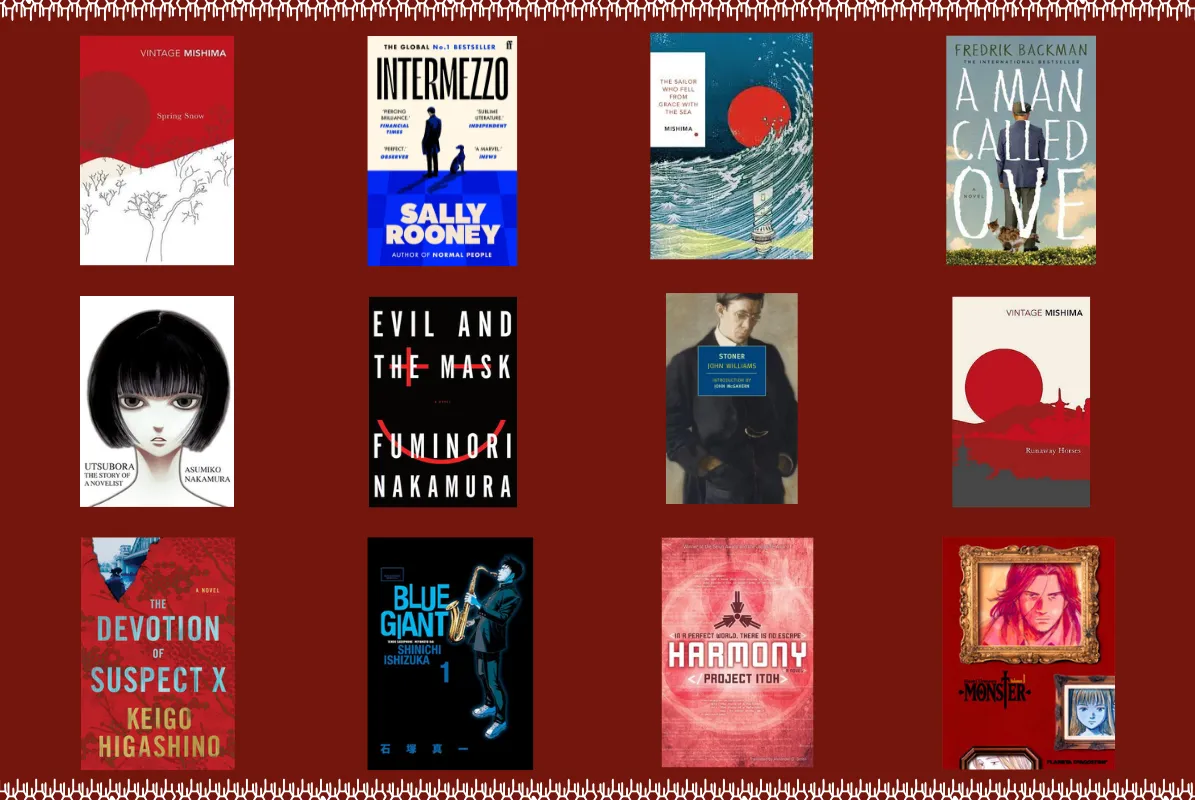
I like Intermezzo by Sally Rooney because reading about mundanity, going nowhere and living inside your head the entire time is appealing. The characters are fighting with their love life, morality and grief within a complicated sibling relationship. Narration being told from both characters' perspective and I can understand how messy it feels trying to figure things out when you don’t take normal life choices.
Judgement, reproval, disappointment, conflict: these are the means by which people remain connected to one another.
I like The Devotion of Suspect X by Keigo Higashino because reading about a perfect murder is thrilling. Maybe I do have a soft spot for Japanese fiction but this book did solidify my bias when I was a teen. I want to keep guessing, keep feeding my curiosity with hows and whys until the last page.
Your assumptions are your worst enemies. Trust them too much, and you’ll fail to see what’s right under your nose.
I like Stoner by John Williams because in your long life, you will encounter solitude much longer than living. I consider luck as something that is life changing. If it’s not then it is just a mindspur moment that means nothing in the long run. The character gets his luck by working on the job he loves, making money from the job that he loves but how unlucky he is to not feel the happiness he is supposed to feel. There's a two pennies situation with a literature professor involved with a scandalous young lover, a trope that feels overused at times that might reflect on real life situations (their words not mine). However, I find this book not justifying nor romanticizing, which is quite a debate in the increasingly moral policing behaviour that prevents us from sitting inside a problematic environment. A fiction is a safe space to reflect and understand different perspectives, not to act on physical life.
In his forty-third year William Stoner learned what others, much younger, had learned before him: that the person one loves at first is not the person one loves at last, and that love is not an end but a process through which one person attempts to know another.
I like Blue Giant Omnibus by Shinichi Ishizuka because nobody in this world can do what you need to do to reach where you want to be. Dedication, persistent and pure stubbornness open more doors than sitting around idling and thinking. This is where fiction inspires better than self-help books. I see and feel the struggle, I’m amazed and inspired, knowing life is about solving problems while enjoying it. Enjoy the process of becoming something that only you want. Oh, also jazz. Jazz is cool.
I like Evil and The Mask by Fuminori Nakamura because evil is persistent. We see evil people around the world, ordering plain murders and justified larceny, knowing there’s nothing we can do to change them but themselves. The protagonist is born with a sole purpose of being evil, but self-awareness is an angel written in disguise. Just a little bit of introspection can help in questioning our deeds.
When people believe they have a good cause, the violence within them bursts forth unrestrained, as if their good angel has given permission for it to escape.
I like A Man Called Ove by Fredrik Backman because ‘We always think there's enough time to do things with other people. Time to say things to them. And then something happens and then we stand there holding on to words like 'if'.’ Nothing left to say.
I like Spring Snow by Yukio Mishima because I'm a sucker for good prose. This is my sanctuary of over the top metaphors about self-greatness and society and why nationalism is good and dense writing and beautiful, gorgeous sentences. A sheltered young man trying to understand the harsh reality of pure desire and not everything will serve him on the silver plate. It’s like a reflection towards widespread westernization in a nation so devoted to its cultural value. It gives me a reason to reflect on my real life surroundings, where traditions are still valuable and celebrated, to say the least how much cultural value can be questioned without actually diminishing its importance.
I like Monster by Naoki Urasawa because reading a cat and mouse game is a thrilling hobby. Chasing after a ghost around the country and unravelling the conspiracies surrounding their life makes me feel like I’m a part of the important quest. I love how polished the art is and it made me discover older mangaka like Kaoru Fujiwara and Ryoichi Ikegami.
I like Utsubora: The Story of a Novelist by Asumiko Nakamura because I love mysterious female characters like in Harmony. Although the plot is pretty confusing and scandalous (who doesn’t love drama tho), it is a part of the charm. The art style is very minimal, it suits the vague tone of the story. And I just like this kind of story, can’t explain why.
I like The Sailor Who Fell from Grace with the Sea by Yukio Mishima because I’m biassed towards anything written by him. The controversial nature of this writer makes me feel like I need to explain myself, but I guess, I do like his works and find his life interesting to read. My resolve and determination are not even a quarter of what this guy has. So I’m naturally fascinated by how much this book surprised me. Written under 150 pages, the dark and unnerving narration makes me question my morality. The story is dense with philosophical takes and pretty disturbing at times. It is not relatable for any of my experiences but just like other Mishima’s books, the alienation makes it appealing.
There isn't any fear in existence itself, or any uncertainty, but living creates it.
I like Harmony by Project Itoh because this is my first sci-fi book that explains philosophy in a beginner friendly way. Ain’t no one can digest such complicated terms from the get go. The story is about girls living in a totalitarian country, having to give up privacy for medical surveillance.
We were chasing after the perfect human but ended up killing consciousness, for it was no longer needed.
I like Runaway Horses by Yukio Mishima because this is the second book from the Sea of Fertility Series after Spring Snow. Even as a standalone book, I find it a compelling read. Although there are recurring characters from the previous book, the story is not strongly linked. Maybe it is just my interpretation of the author's own perspective. One thing about Mishima is I felt very opinionated to say this series is the set of ideals that he believes in, leading to his death. I haven’t read the last two books in the series but I do believe in the strong ideals he presented throughout his writings. The protagonist is fairly young, just like in Spring Snow, the personality echoes but not the decisions made. It felt like all childish acts of the previous protagonist are rewritten as what the author ideally believes in the first place. Despite your ideals, obsession will lead to doom.
I really like reading about what people read and decided to write my own. Next part, I will talk about my tbr (also pretty long). Have a good day!
happy reading,
reesa